Clocking In 5 Minutes Early: Does Your Employer Have to Pay You?
Do you get paid for clocking in early? Learn about the 5-minute grace period rule and how much money you’re losing to unpaid 'charity' work for your boss.
You're a "good worker." You get to the site early, you put your gear on, and you punch in at 7:55 AM even though your shift doesn't technically start until 8:00. Maybe you do it because you want to show initiative, or maybe you just hate being rushed. But have you ever checked your pay stub to see where those five minutes go? For most people, those extra minutes vanish into a corporate black hole, and legally, your boss might be getting away with a lot more than you think.
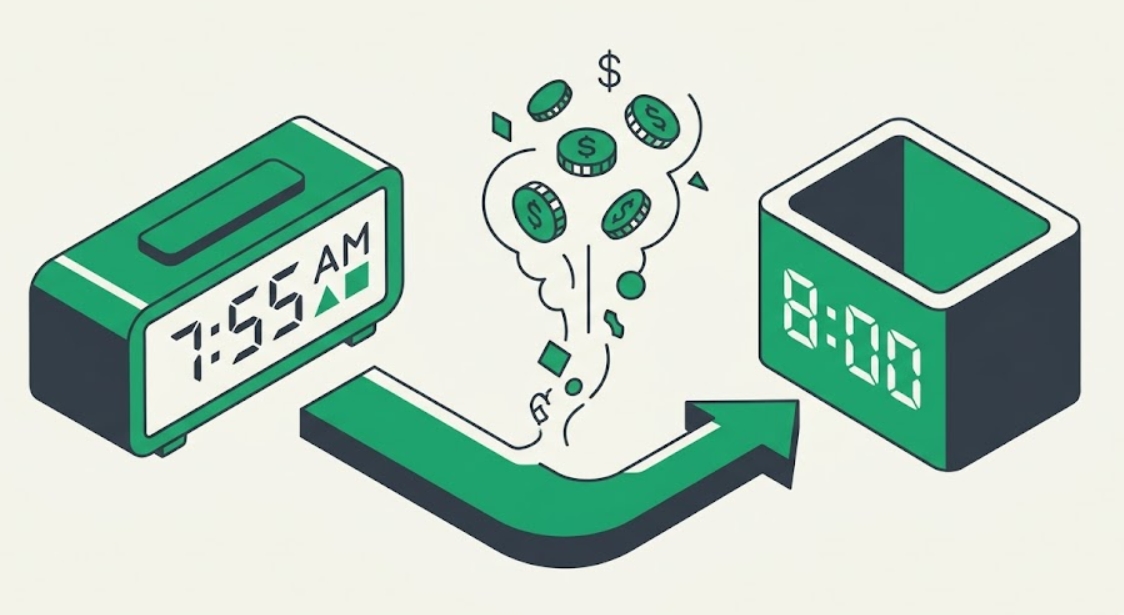
The "Clock In Early Grace Period" Scam
Federal law is a bit slippery here. The FLSA (Fair Labor Standards Act) allows employers to round time to the nearest quarter-hour (15 minutes). This is where the "7-minute rule" comes from. If you clock in at 7:53 AM, they can legally round that up to 8:00 AM. If you clock in at 8:07 AM, they round it down to 8:00 AM. In theory, it’s supposed to "even out" over time.
But let’s be real: when was the last time you were seven minutes late? Exactly. Most of us are early because we don't want to get written up. If you’re punching in 5 minutes early every single day, you aren't "evening out" anything. You’re just giving the company free labor. And while five minutes sounds like nothing, the math starts to get ugly very fast.
Are You Donating 21 Hours a Year?
Do the math. Five minutes a day, five days a week, is 25 minutes a week. Over a standard work year (50 weeks), that’s 1,250 minutes. That is nearly **21 hours of unpaid work**. If you make $25 an hour, you just handed your boss a $500 bonus for doing absolutely nothing. That’s a new set of tires, a weekend trip, or a big chunk of your grocery bill—gone, just because the time clock "rounded up."
I've talked to guys who thought it was "just the way it is." It's not. If your employer *requires* you to be there early to set up, attend a pre-shift meeting, or put on safety gear, they **must** pay you for that time. No grace period, no rounding tricks. If you're working, you're earning. Period.
How to Get Your Minutes Back
The first step is knowing exactly what you’re owed. Use our gross pay calculator to plug in your actual punch times—not the rounded ones the company gives you. Compare that total to your check. If the numbers don't match, you have a paper trail.
Honestly, stop doing "favors" for a multi-million dollar company that doesn't know your middle name. If they want you there at 7:55, they can pay you for 7:55. If they won't, then maybe that 8:00 AM start time is exactly when your boots should hit the floor.
Common Questions About Early Clock-Ins
Can my boss force me to clock in early?
They can request it, but they must pay you for it. If you are 'suffered or permitted' to work, meaning they know you're working and let you do it, that time is compensable under federal law. If they require you to be 'at your station' before the bell rings, the clock starts then.
What is the 7-minute rule?
It's a common payroll practice where any time under 7 minutes and 30 seconds is rounded down to the nearest 15-minute increment, and anything over that is rounded up. While legal, it must be applied fairly in both directions, not just in the employer's favor.
Should I wait in my car until exactly my start time?
If your company uses aggressive rounding that consistently shorts your check, then yes. Protecting your time isn't being 'difficult,' it's being a smart worker. If they aren't paying for the 5-minute 'pre-game' prep, you shouldn't be providing it for free.